
Curate
UX/UI + AI Case Study · AI-Powered Fitness App
AI fitness for the life you actually have.
Role: Product Designer · Type: Concept Project · Duration: 4 Weeks
THE PROBLEM
Fitness apps are designed to shame people into showing up. It's not working.
Streak counters, declining progress charts, and "you haven't worked out in 4 days" notifications all deliver the same message: variability is failure. 22.9% of people who download a health app stop using it — and shame-driven dropout is a reason why. The apps aren't failing because fitness is hard. They're failing because they were designed for an idealized user who doesn't exist — someone with consistent time, consistent energy, and no life getting in the way.
Curate was designed for everyone else.
MY APPROACH
A 4-week sprint run like a product launch.
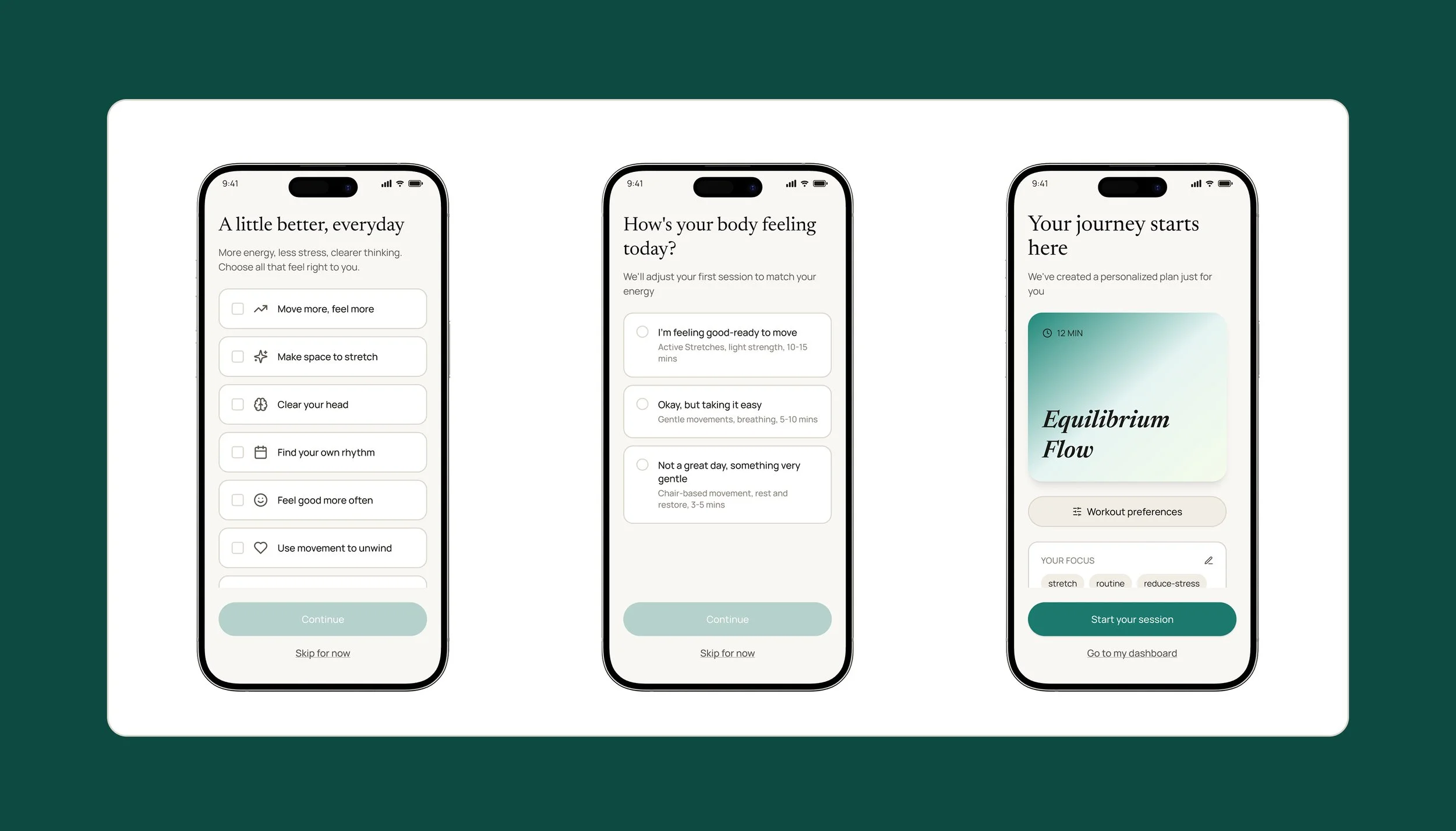
The constraint was real: four weeks to go from research to a shippable concept. That meant deliberate scope trade-offs early — I deprioritized building a full app and prioritized two things: a complete brand identity and a zero-decision onboarding flow. When investors and users evaluate a new product, they look at the brand first. The onboarding prototype existed to make that first-minute experience tangible, not to simulate a finished build.
To keep pace with such a tight schedule, I accelerated research by designing a multi-model AI workflow. Instead of relying on a single LLM, I created a cross-model process to compress the research phase and eliminate algorithmic blind spots:
Synthesis & Strategy: Claude and ChatGPT for thematic analysis and directional framing
Validation: Perplexity and Consensus to cross-verify insights against hard market data
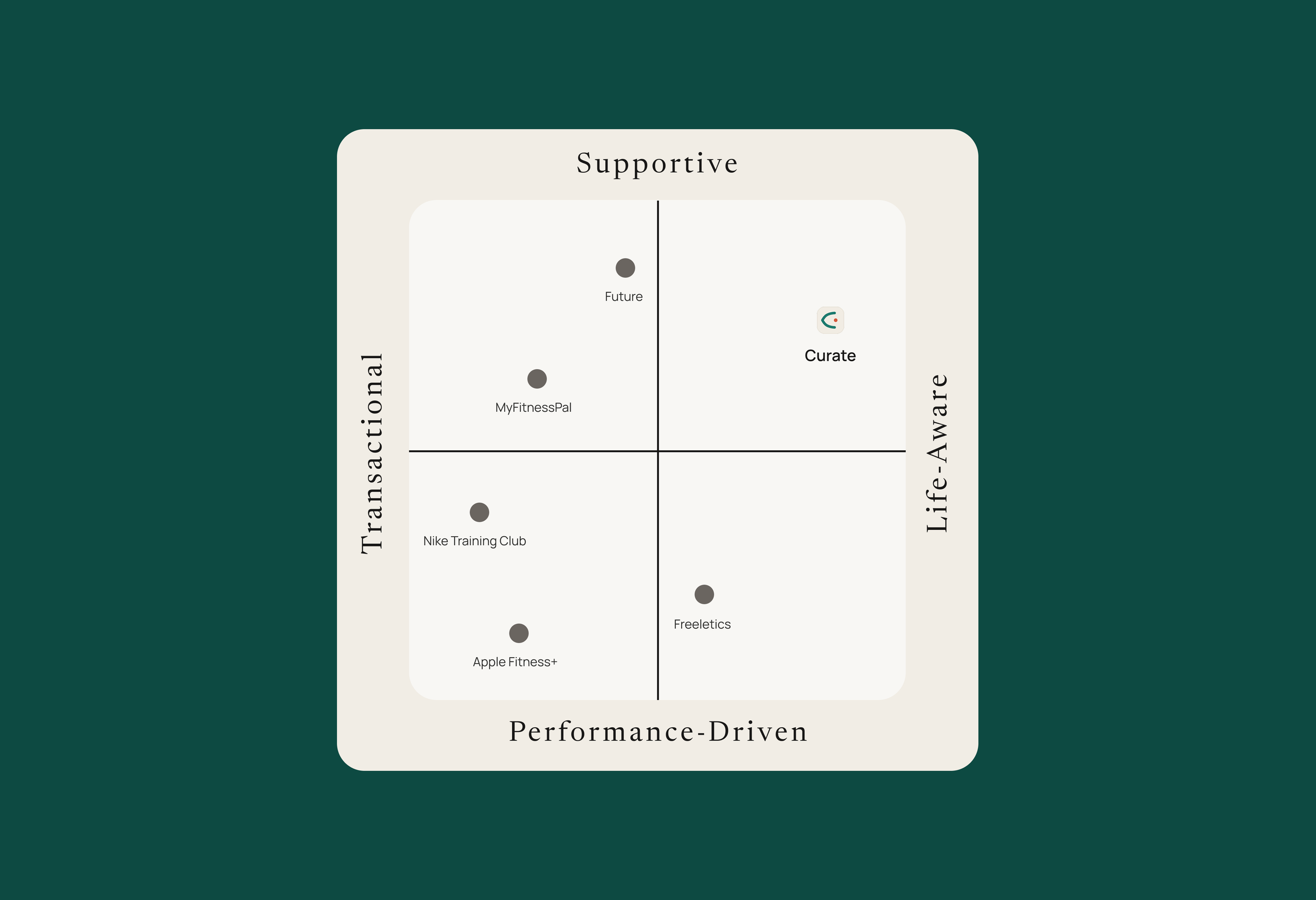
This wasn't a predetermined system; it was a judgment about which tool to reach for and when. By the end of the research phase, the market landscape, the competitor positioning, and the user persona were all pointing at the same gap — and it was specific enough to build from.
KEY DESIGN DECISION
Designing for the user who already gave up once.
Most fitness apps are built for someone who just needs the right tool. Curate was designed for someone who has already tried the tools and left. That starting point changed everything.
To solve for this user skepticism, I stress-tested the onboarding experience against an accessibility-focused persona. If the interface could build trust and clarity for a user navigating the highest cognitive and physical friction, it would inherently create a seamless experience for everyone else. This extreme lens exposed two critical, structural barriers in the initial onboarding flow:
Screen Reader Failure: Key interactive UI elements were failing basic screen-reader communication, breaking the user's mental model before they experienced the product. I rebuilt these components to ensure semantic accessibility.
Friction at the Finish Line: The final step featured competing CTAs that created confusion rather than momentum. I stripped the interface down to create a high-confidence path forward.
By designing for the hardest use case first, the onboarding became what it was always meant to be — a zero-decision entry point into Curate.